Who read what, how it came back, and what looks wrong
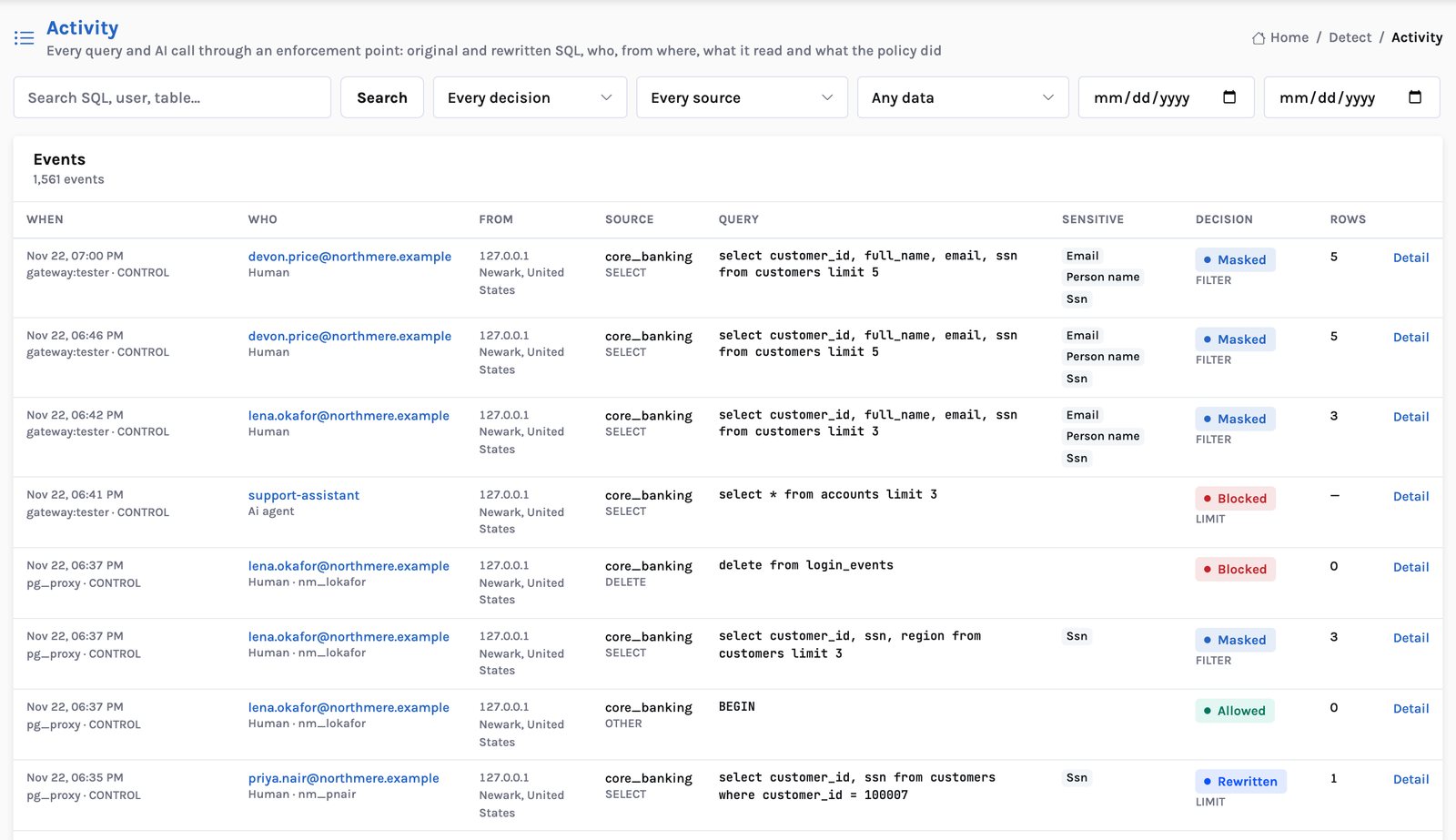
Every query and AI call through an enforcement point is an event: who, from where, the original and rewritten SQL, what it read and what the policy did. Each principal has a baseline; seven detectors score what departs from it, and an incident is decided by people.
Every decision, searchable
Search by SQL, user or table; filter by decision, source or data class. Each event opens to the original against the rewritten SQL with every reason, the database user, client address and location, the enforcement point, rows, bytes and duration.
- Filter by data class — every query that read card numbers last week
- CONTROL and SNIFF — inline and monitor events side by side
Points you can add up, each with its reason
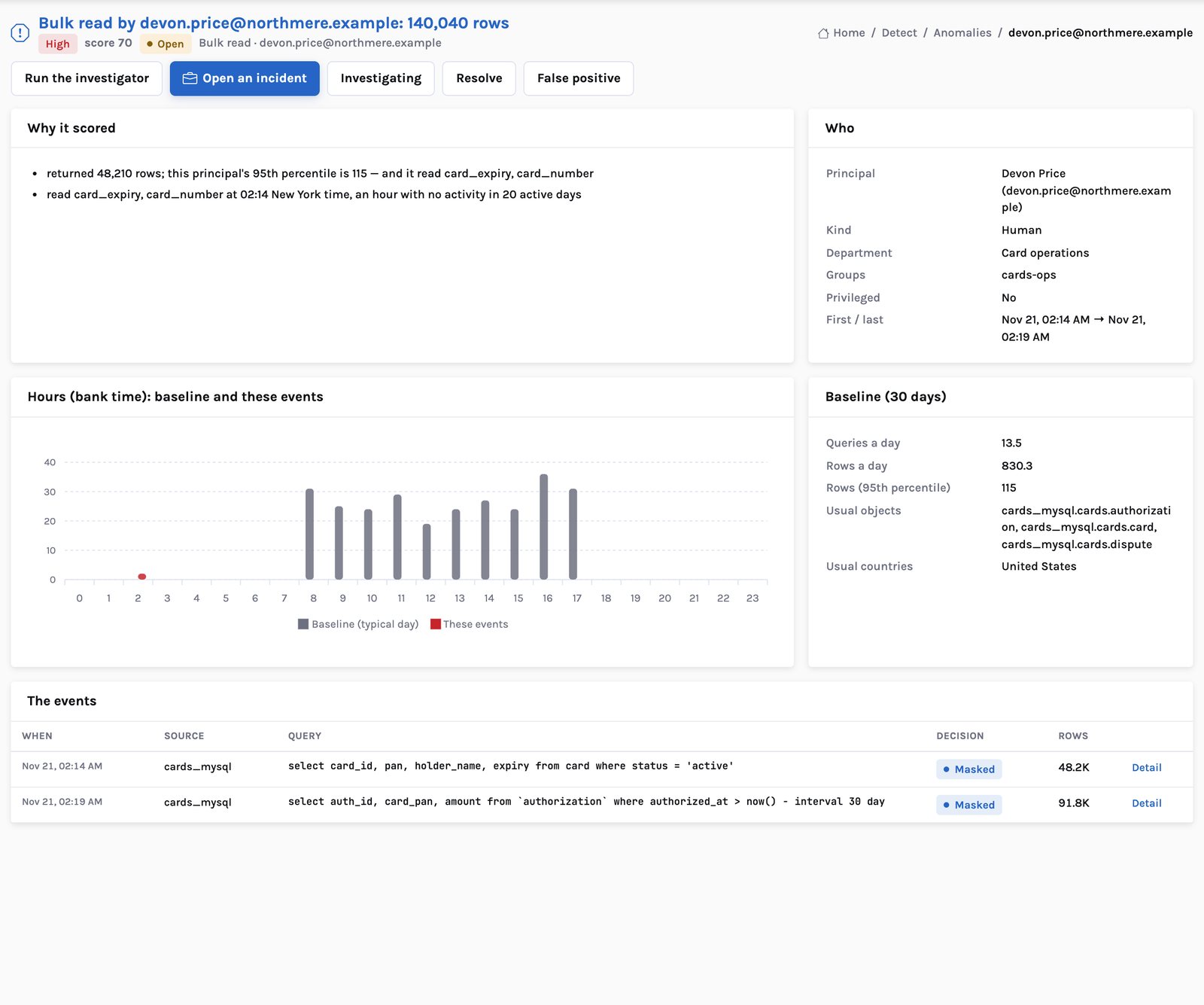
A principal’s baseline covers its queries and rows a day, the 95th percentile of rows per query, the hours it works, the objects and data classes it reads and the countries it connects from. Detectors add points: bulk read, off-hours, dormant account, new object, new country, a burst of blocked queries, and an AI agent’s prompts carrying identifiers. Severity follows the score.
- Bulk read — at least 10 times the principal’s 95th percentile, and at least 5,000 rows
- Dormant account — silent 21 days or more, then active
- Severity — 80 and above critical, 60 high, 35 medium
- False positives kept — closed with the person’s note on the record
Scored by the engine, prepared by agents, decided by people
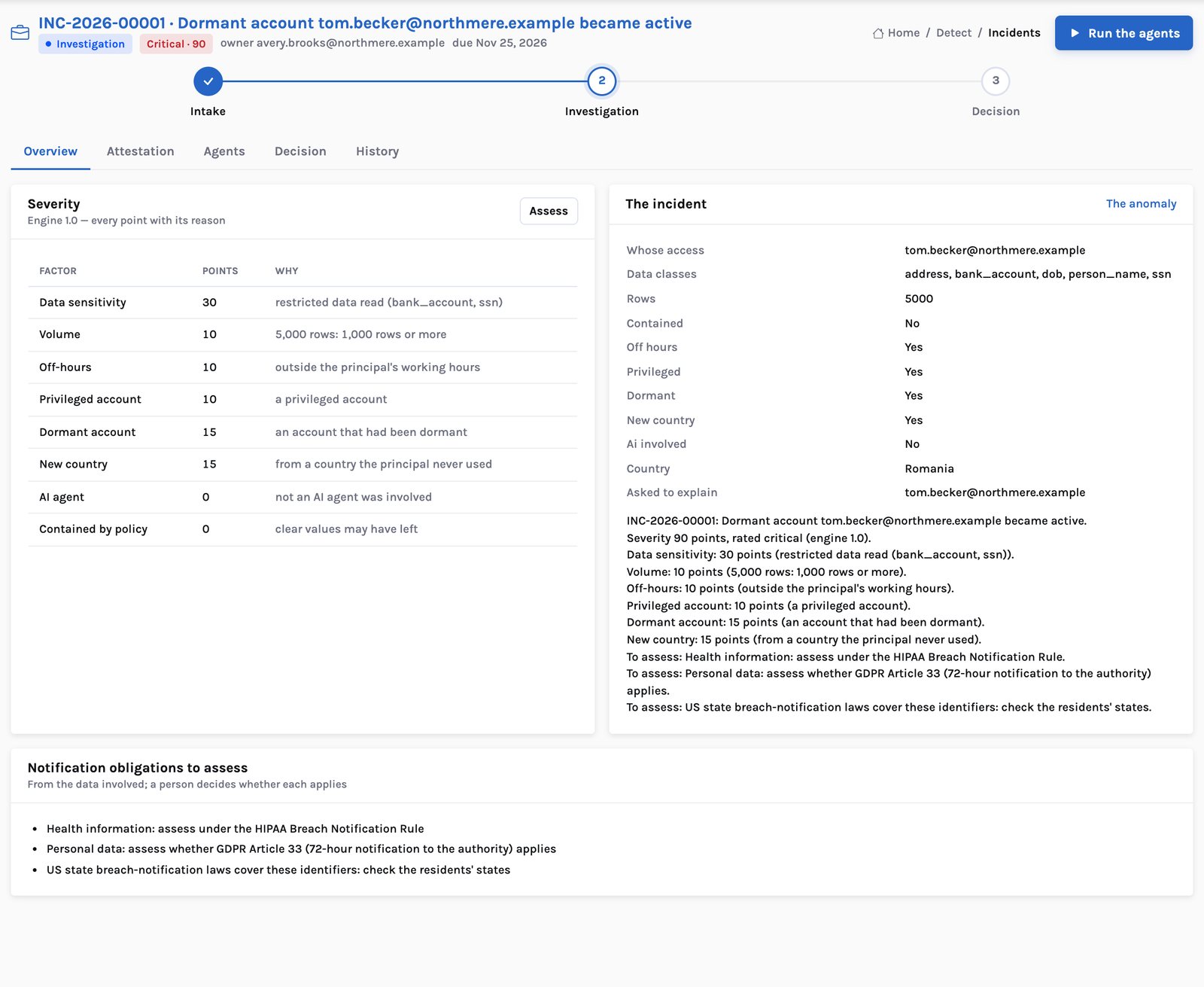
An incident opens from an anomaly or by a person. The severity engine scores data sensitivity, volume, off-hours, privileged and dormant accounts, new countries and AI involvement, and whether the policy contained it. The incident writer drafts the summary and an attestation request to the account holder, and lists the notification obligations to assess: PCI DSS 12.10, GDPR Article 33, the HIPAA Breach Notification Rule and state breach laws.
- Attestation by link — the account holder answers on a no-login page, once a person sends it
- Four eyes on high severity — a lead who did not submit it decides
Ask the records a question
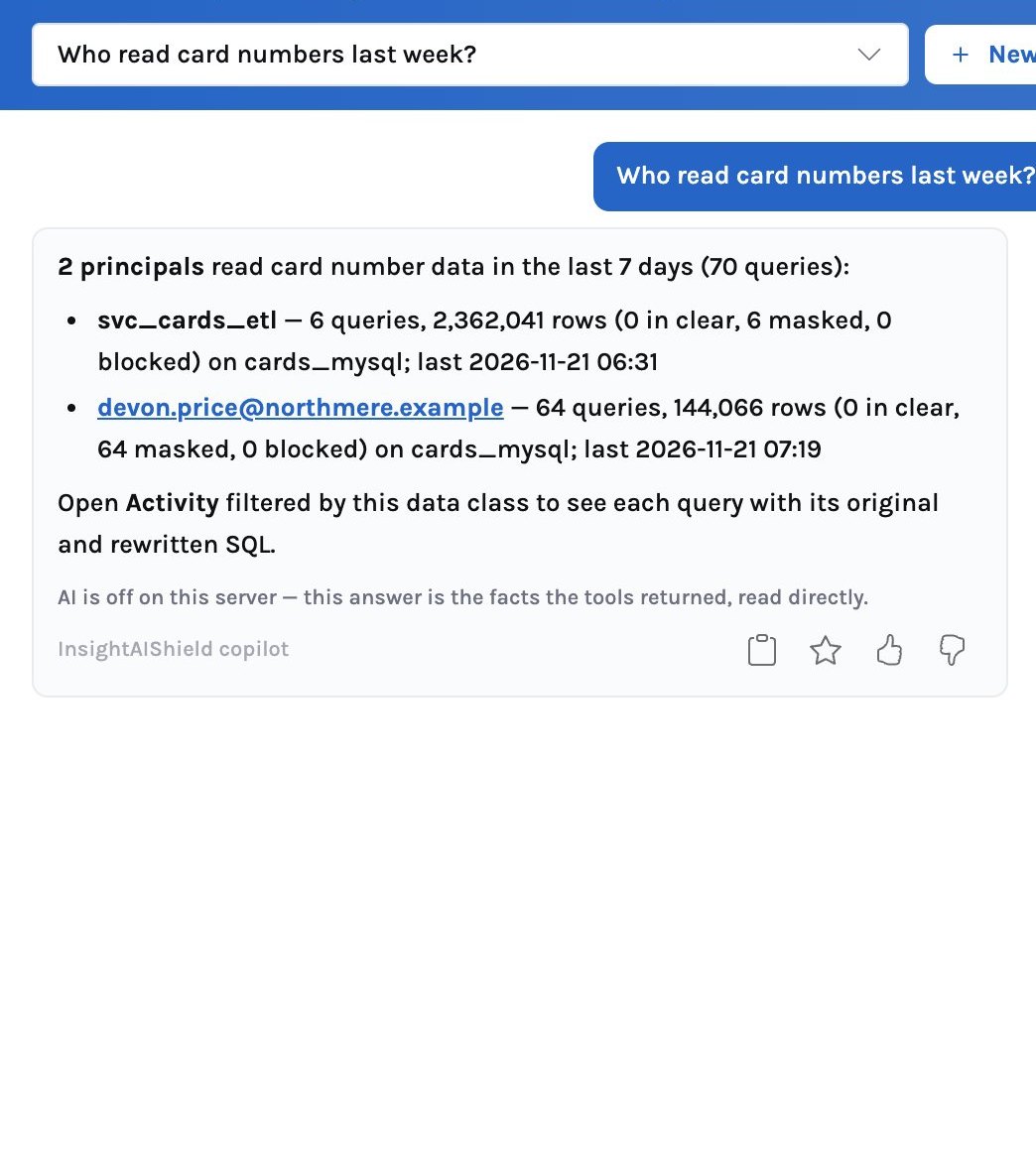
“Who read card numbers last week?” The copilot answers from the activity records with read-only tools, and says so. With the model switched off it returns the facts the tools found, read directly.
Where people stay in charge
- An agent prepares an incident or a false-positive note; a person opens, closes or decides it.
- SIEM batches and attestation requests are held until a person releases them.